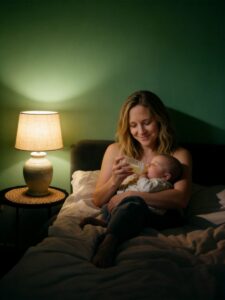
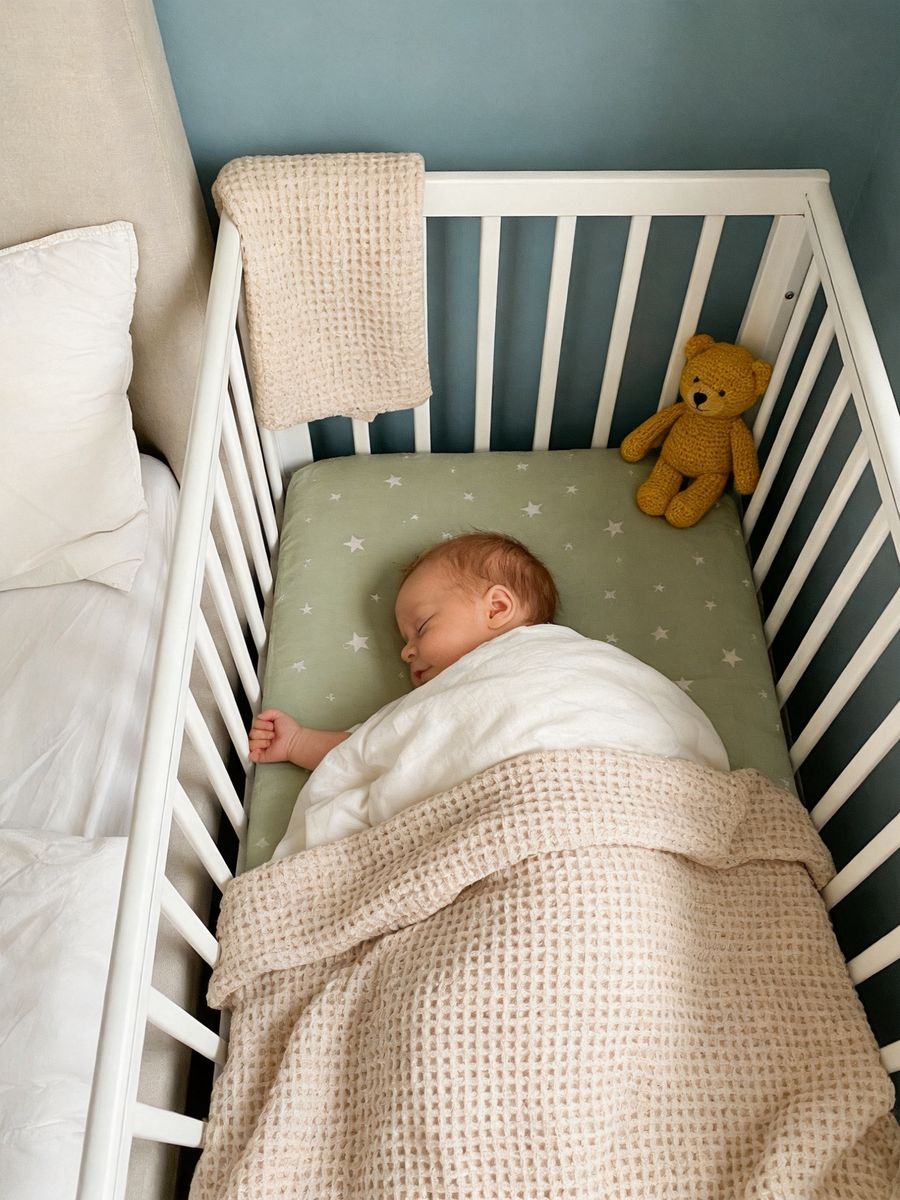
We did the first year of Theo’s life in a 600-square-foot one-bedroom in Brooklyn, which meant “the nursery” was a corner of our bedroom and “white noise” had to make peace with the neighbors on the far side of a prewar wall. Most sleep advice quietly assumes you have a separate room with a door that closes. A lot of us don’t. Here’s what actually worked in a space where everyone sleeps more or less on top of each other.
The crib went where the light wasn’t
Forget the pretty corner. I put the crib in the spot with the least streetlight and the least morning sun, which turned out to be the most awkward corner in the room. We rearranged the entire bedroom around that one decision, and I’d do it again tomorrow. Then I taped cheap blackout panels straight onto the window frame, not the nice ones, the ugly ones that actually block light. Brooklyn streetlights do not mess around.
White noise did double duty
In a small apartment, white noise does more than soothe the baby. It covers the sound of you existing. Us climbing into bed, the radiator clanking awake, the upstairs neighbor who apparently took up bowling at midnight. We ran a simple white noise machine on a low, steady setting all night long, and suddenly I could close a dresser drawer without holding my breath.
We stopped tiptoeing
This one genuinely surprised me. For the first few weeks we moved through the apartment like we were defusing something. Then I read that babies who only ever sleep in total silence learn to need total silence, which, in 600 square feet in a city that never fully shuts up, is a life sentence. So we let normal life happen at a normal-ish volume. Theo got better at sleeping through the espresso machine, the door buzzer, the garbage trucks doing their 5 a.m. opera. A city baby has to.
Wake windows beat the clock
I wasted so much energy trying to put him down at specific times. What actually worked was watching him instead of the clock: the glazed stare, the first yawn, the little face-rub. Catching that window mattered more than any schedule on any app. Miss it by fifteen minutes and bedtime turned into a forty-minute negotiation. I got weirdly, proudly good at spotting the yawn.
“Drowsy but awake” is a beautiful lie (mostly)
Every book tells you to lay them down “drowsy but awake.” For the first few months, my son interpreted “drowsy but awake” as “fully awake and deeply betrayed.” I made my peace with rocking and feeding him most of the way down for a good long while, and he picked up the other skill later, on his own timeline. If the perfect method isn’t working at eight weeks, you didn’t fail it. The method just doesn’t fit a brand-new baby yet.
What small-space sleep is really about
The hardest part isn’t the baby. It’s that when the baby finally goes down, you’re standing three feet away, afraid to flush the toilet. A good chunk of my “sleep problem” was actually a “no privacy, nowhere to decompress” problem. The night I accepted that — and gave myself permission to put in one earbud and watch something dumb in the same room while he slept — I started to feel like a person again.
You don’t need a big apartment or a separate nursery to get a baby to sleep. Honestly, the closeness has its own quiet payoff: I could hear every snuffle without an app to tell me about it. We made it work in 600 square feet, and you can too. Lower the light, turn up the white noise, and stop apologizing to the city for being loud.