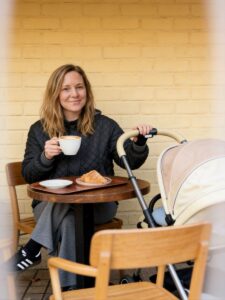
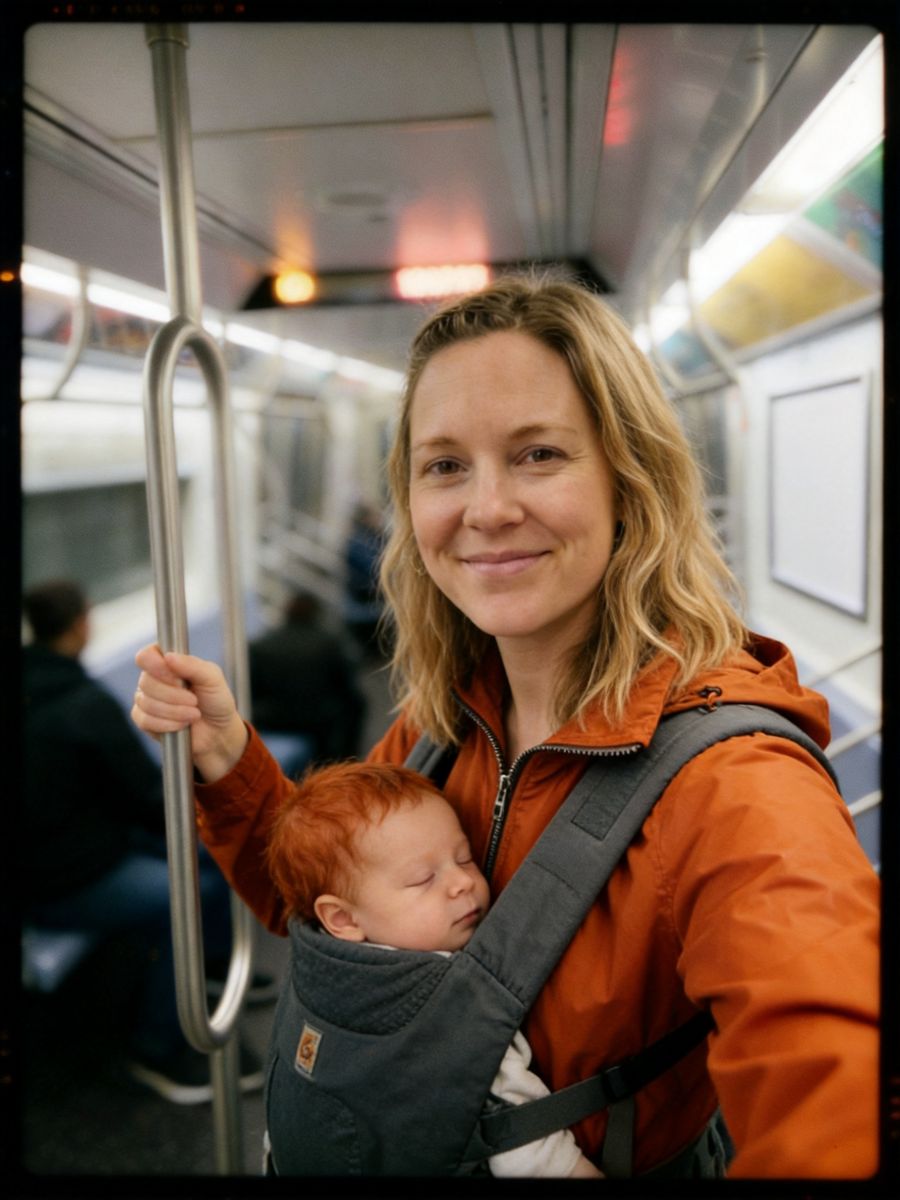
The first time I took Theo on the subway alone, I stood at the top of the stairs at my station — which, like most stations, has no elevator — holding a folded stroller in one arm and a newborn strapped to my chest with the other, and I genuinely considered just turning around and going home. Then a stranger grabbed the front of the stroller without a word and carried it down with me. I almost cried. That’s the subway with a baby in one sentence: occasionally impossible, occasionally the kindest place on earth.
Here’s everything I wish someone had told me before that first trip.
The carrier beats the stroller underground
For solo subway trips in those first several months, I almost always wore Theo in a carrier and left the stroller at home. No folding, no stairs, no blocking the doors, no flagging down four strangers for help. Hands free to actually hold a pole. If you change one single thing about subway life with a newborn, make it this one. The stroller is for the neighborhood. The carrier is for the train.
If you must bring the stroller, plan the stairs
When I did need the stroller, I learned which nearby stations actually had working elevators, and I’d sometimes walk the extra avenue to use one. The MTA elevator situation is its own quiet heartbreak: they exist at a fraction of stations and break down constantly. I kept a running mental map. And for the stairs, I learned to just ask, clearly and out loud: “Could you help me carry this down?” New Yorkers have a reputation for being cold. In my actual experience, ask a direct question and someone almost always says yes.
Time it like a local
Rush hour with a baby is a special kind of misery. Whenever I had the choice, I traveled mid-morning or early afternoon: emptier cars, a real shot at a seat, and far less panic about the doors closing on a stroller. If I had to move during rush, I’d let one packed train go and wait for the next, calmer one. Your schedule is more flexible than a commuter’s. Use that advantage shamelessly.
The seat situation
Wearing the baby, I usually got offered a seat. Pushing a stroller, almost never — people just don’t read a stroller the same way. So I stopped waiting to be offered and started politely asking when I needed it, usually of someone in the priority seats by the door. Most people pop right up, a little embarrassed they hadn’t noticed.
Pack like you might get stuck
Trains get delayed. Twenty silent minutes between stations with a hungry baby taught me to always carry more than I think I’ll need: an extra bottle, more diapers than seems reasonable, a backup outfit — for the baby, and after one memorable spit-up, basically for me too. A stuck train is survivable when you’re prepared and genuinely awful when you’re not.
The part that surprised me
I’d braced for the subway to be the hostile front of new-mom life in this city. Instead it became the place where the city quietly showed up for me: the man who carried the stroller down, the teenager who gave up her seat, the older woman who pulled faces at Theo across the car so I could eat a granola bar with both hands. The subway with a baby is hard. It is also, weirdly often, where I felt most certain the city had my back.