

Heads up: I earn a small commission if you buy through my links. I only write about what we actually use.
I thought I was overthinking it.
Everyone said feeding takes time. Babies are gassy, babies cry, it settles down. Maybe. But by week eight I was dreading the next bottle. Not because I didn’t want to feed him. Because I never knew how the hour after it was going to go. Most evenings he’d pull off, arch, and we’d start the long walk around the apartment.
And in the other direction, nothing. Three or four days of straining, and what finally came was dry and pebbly.
By then we were on our fourth can, each one recommended by someone who meant well, each one with “gentle” or “sensitive” on the front. I’d started to assume the problem was him. Or, on the worse nights, me.
The evening I was actually after
I know exactly what I wanted, because I eventually got it. A bottle at seven. Him heavy and warm and done, not arching. The sound machine on, and me on the sofa with a cup of tea that was still hot. That’s the whole dream, and for two months it felt impossible.
What the “gentle” cans had in common
I finally did the thing I should’ve done first. I lined the four cans up on the counter and read the first few ingredients on each one.
Corn syrup solids, or maltodextrin. Then added starch to bulk things up. On most of them, no live culture anywhere on the panel. I’m not going to name them; none of them are villains and plenty of babies do fine on them. But every can I’d tried was built the same way. I’d been switching between four versions of one recipe. The one we kept doesn’t sit on that shelf at all.
It was never the wrong baby
Here’s what finally clicked. A formula is decided by two things printed right on the label: which sugar it’s built on, and whether there’s anything living in it. Breast milk’s sugar is lactose. It carries living cultures, and the prebiotics that feed them. It doesn’t lean on starch.
So when a can starts with corn syrup solids and has no culture, it can print “gentle” in any font it likes. It’s built on a different foundation. I hadn’t been failing to find the right formula. I’d been shopping the wrong shelf. Four cans of the same recipe not working isn’t a verdict on your baby, or on you.
What I’d been buying
- Corn syrup solids or maltodextrin listed first
- Added starch to bulk things up
- Often no live cultures at all
What breast milk is built on
- Lactose as the sugar
- No starch, no fillers
- Living cultures, plus the prebiotics that feed them
The can that’s built the other way around
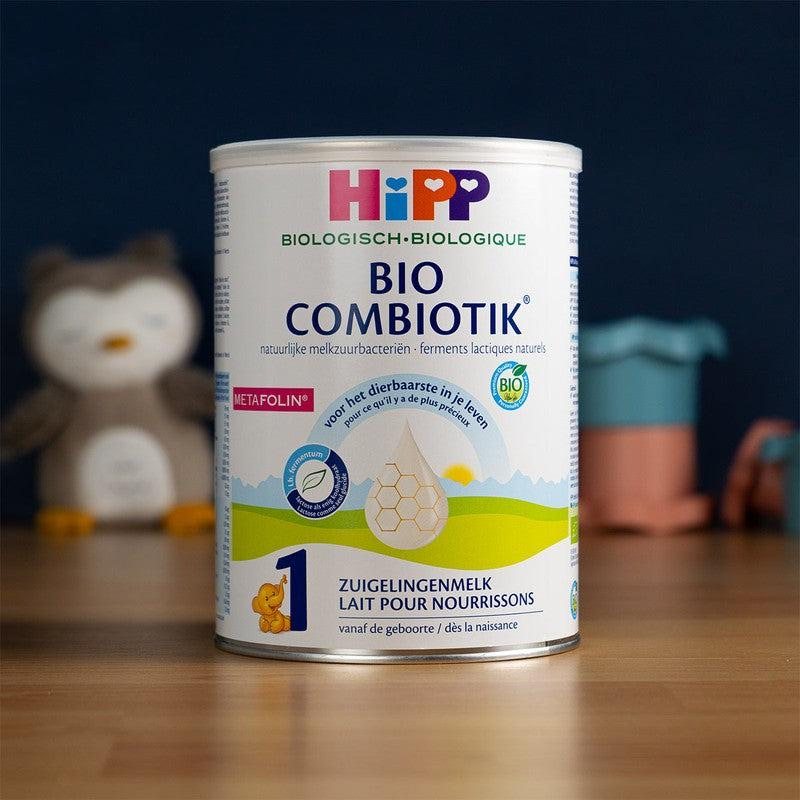
HiPP Dutch Stage 1 uses lactose as its only carbohydrate, with no corn syrup solids and no maltodextrin, and the product page says plainly that it’s free of starch. That’s the first test, and every can on my counter had failed it.
The part that made me put my phone down is the second test. HiPP calls the system “Combiotic”: a prebiotic (galacto-oligosaccharides) made from that same lactose, paired with a living lactic-acid culture that HiPP describes as originally isolated from human breast milk. The sugar in the can is the sugar the culture in the can lives on. The way HiPP describes it, that pairing is the point: the can arrives with its own culture and the sugar it feeds on, instead of leaving that to chance.
One more thing, because HiPP’s recipes differ by country: the Dutch one is the version that stays starch-free across every stage. Make sure it’s the Dutch box.
Two parents who’d been through the same cans
“Baby loves the milk. He has regular bowel movements and no longer spits up. It really does act like breast milk; his stool is the colour and texture of an exclusively breastfed baby.”
Review on organicsbestshop.com
“Beautiful formula that has solved our daughter’s constipation issues. She sleeps much better, and I feel relieved knowing HiPP Dutch uses natural ingredients.”
Review on organicsbestshop.com
Two families, not a study. But relieved is the word I’d have picked too.
Where we landed: HiPP Dutch Stage 1
- Lactose as the only carbohydrate, no corn syrup solids or maltodextrin
- Free of starch and maltodextrin
- Combiotic: a prebiotic from that lactose plus a living culture
Ships from Europe, insured, in a few business days. If it turns out not to be your baby’s formula, Organic’s Best says they’ll send a gift card toward a different one.
What changed for us, and what didn’t
We ran the switch past our pediatrician first, and I’d tell you to do the same. Every baby is different and I’m one mom, not a study.
I ordered one can off the European shelf, expecting it to end up under the sink with the rest. The first evening I noticed anything, I was halfway through a cup of tea that was still warm — that was day three. By the end of that first week the long walk around the apartment had quietly stopped being a nightly thing. Week two, the gas drops moved from the changing table into a drawer.
I’m not going to dress that up into a miracle. There were still nights I couldn’t explain; if a formula promises you a cured baby, that’s the promise I’d distrust. And I’ll say it plainly, because it’s true: breastfeeding is best for babies whenever it’s possible. This is for families feeding with formula anyway, who want to know what they’re actually buying.
Before you click, the things I’d want to know
The honest part
It ships from Europe. Insured express delivery, a few business days door to door. That still means you order ahead or you run out; running out mid-week is a mistake you only make once.
A tin is $49.99. Ours lasted about a week at that age once he was fully on bottles. It costs more than anything at Target, and I’d rather you know that here than at checkout.
What about the newer lactose-based cans at the store? Some of them pass the first test. Whether they pass the second, a prebiotic made from that same lactose paired with a living culture, is on their label too. Read it the same way.
Is it FDA-approved? Organic’s Best says it plainly on their own FAQ: HiPP isn’t FDA-approved; it’s made and regulated under European food-safety rules instead. Read that page before you order.
It contains palm oil. That sends some parents running, so you should know it before you buy.
If it isn’t the one: the product page says that if a different formula is a better fit for your little one, they’ll send a gift card to try another box or can for free. A gift card, not a refund; they don’t take formula back once it’s shipped. Read their terms yourself.
The other end of this story
There’s a part I left out of the beginning. Theo nursed for exactly six weeks before my supply quietly packed up and left, and the first can on our counter was one I’d panic-bought on the way home. For two months I thought the hard evenings were the price of that. They weren’t. They were the shelf. Finding the can built from the same building blocks as what I’d been making is what let me set the whole thing down.
You weren’t picking the wrong formula. You were shopping the wrong shelf. Go read one label properly, and you’ll see it too.
Check the ingredient panel at Organic’s Best
Lactose as the only carbohydrate, no corn syrup solids, no maltodextrin. The ingredient panel is on the product page. And always talk to your pediatrician before changing your baby’s formula.
A quick honest note: some posts here are sponsored, and Big Apple Baby earns a small commission when you buy through these links, at no extra cost to you. That income keeps the site running.