
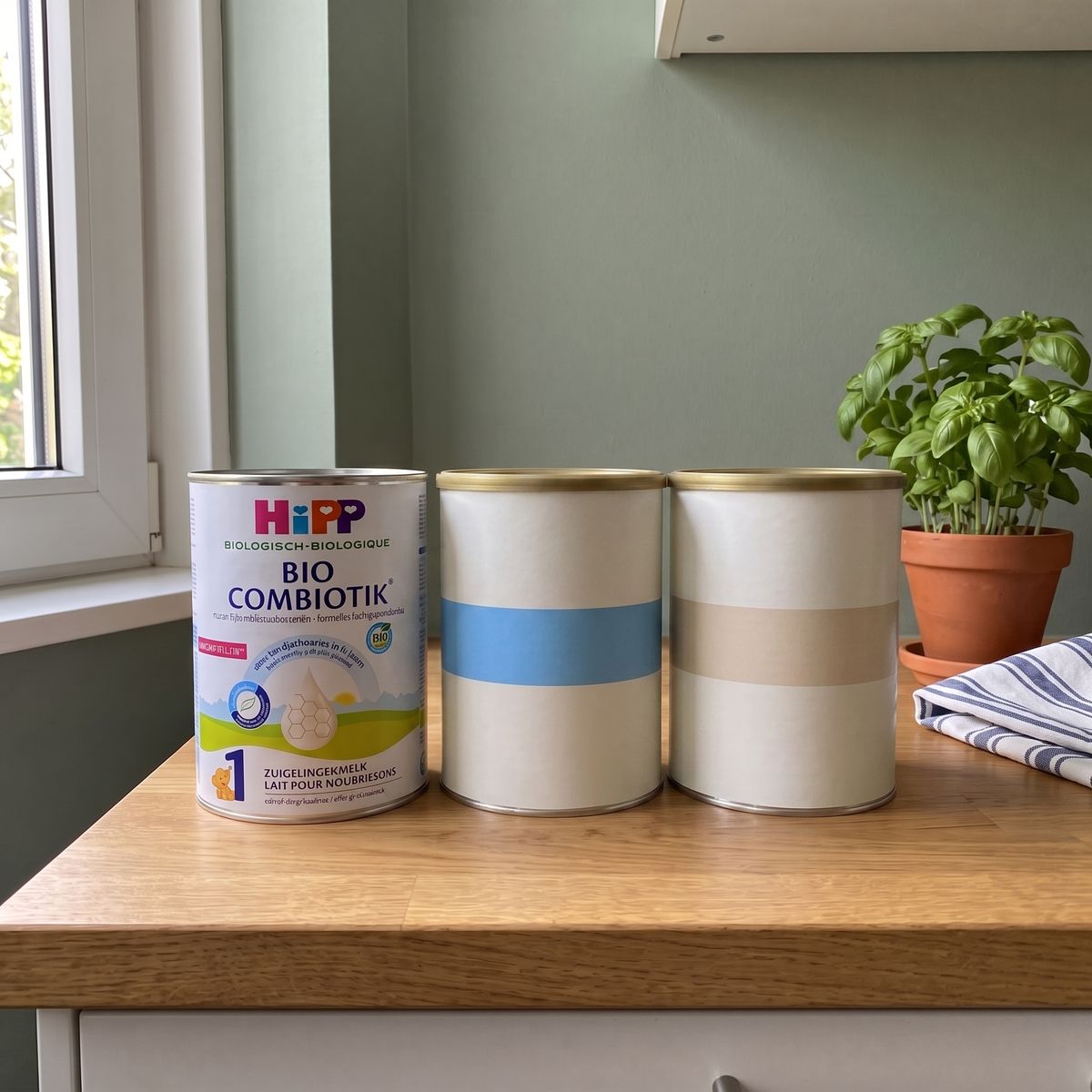
The first time another mom said the words “European formula” to me, I smiled, nodded, and quietly decided to never take her advice on anything again. European formula? Wasn’t that something you had to know a guy to get? Was it even legal to give a baby? I walked home fully intending to forget she’d said it.
Then it was 2 a.m., Theo was finally asleep on my chest, my coffee had gone cold for the third time, and I did the thing I do when a question won’t leave me alone. I went down the rabbit hole. EU regulations, ingredient lists, importer return policies, all of it. And what I found genuinely reorganized how I thought about the can sitting in my kitchen.
So here’s the plain-language version I wish someone had handed me that night: what’s actually different between European and American formula, and what’s just noise.
Start with the sugar, because that’s the part that mattered
I’ll lead with the least glamorous difference, because it’s the one that changed everything for us. Breast milk’s main carbohydrate is lactose — milk sugar, the carb a brand-new gut is built to handle. A lot of European formulas keep lactose as the only carbohydrate by default.
Plenty of American formulas do too, to be fair. But a chunk of the US “sensitive” and “gentle” lines swap some of that lactose for cheaper carbohydrates: corn syrup solids, maltodextrin, a little starch. None of that is dangerous, and loads of babies do completely fine on it. For a gassy, backed-up baby like mine, though, that one swap turned out to matter more than the brand on the front ever did. If you want the full version, I broke down exactly what to look for in how to read a formula label without losing your mind.
The ingredient rules really are stricter in the EU
This is the part people get heated about, so let me keep it factual. European organic standards for infant formula are, on the whole, tighter about what’s allowed in the can and how the milk behind it is farmed. A handful of ingredients you’ll find in some American formulas are restricted, or simply not permitted, under EU organic rules.
Here’s what that does not mean: it does not mean American formula is unsafe. Every formula on a US shelf is regulated, and “held to different standards” is not the same sentence as “bad.” It just means the word “organic” sits in a slightly different place on each side of the Atlantic. Once I understood that, the whole thing felt less like a scandal and more like a spec sheet. Reassuring, actually.
So is European formula even legal here?
This was the question keeping me up, so I’ll answer it straight. European formulas aren’t reviewed by the FDA the same way American ones are, which is why you won’t see them lined up next to the familiar tubs at your regular store. What you can do is buy them through US-based importers that bring them in from the European manufacturer.
That importer piece is the whole game. There’s a real difference between a company with a traceable supply chain and some random reseller flipping cans of unknown age. After enough reading, here’s the checklist I wouldn’t budge on:
- They source straight from the manufacturer in Europe, not the grey market.
- They ship fast and keep it cool, with long expiration dates, not cans three weeks from turning.
- The instructions show up in English, so you’re not translating a feeding ratio at 3 a.m.
- There’s some kind of guarantee if it doesn’t agree with your baby, so you’re not gambling forty dollars a tin on a maybe.
The honest side-by-side
When I finally got it straight in my own head, it looked something like this:
| Many European formulas | Many American formulas | |
|---|---|---|
| Main carbohydrate | Usually lactose only, by default | Often lactose — but some “sensitive” lines use corn syrup solids or maltodextrin |
| “Organic” bar | Stricter EU organic rules | USDA organic — regulated, set at a different bar |
| Where you buy it | Through US-based importers | Right off the store shelf |
| Oversight | Not FDA-reviewed like US formula — so vet the importer | FDA-regulated |
Neither column is the villain. They’re just two different sets of rules, and which one fits depends entirely on the baby drinking it.
Is it actually worth the hassle?
Honest answer: for plenty of families, no. If your little one is happy and thriving on a standard American formula, there’s no prize for switching, and change for its own sake can kick off a week of drama nobody asked for. A baby who’s doing well is the goal, not a particular flag on the label. And please run any switch past your pediatrician first — I did, and I’d tell you to do the same.
For us, after months of trial and error, it was worth it. Not because European formula is magic, but because the lactose-only recipe was the thing that finally settled Theo’s stomach. That’s the honest size of it. I wrote about how that whole search actually ended separately, because it turned into its own saga.
If your baby is fighting every feed and you’ve started reading the back of the can like a detective, that’s where I’d point you next. The country on the label was never the magic word. But for a label-obsessed mom with a fussy baby, those small differences added up to the first quiet night we’d had in months.