When I was pregnant, a well-meaning relative emailed me one of those “cost of a baby’s first year” articles. The national average it quoted made me laugh out loud, because I live in New York City, where that number is roughly the down payment on the down payment. Raising a baby here is expensive in ways the generic lists never mention. After a year of doing it, here’s where the money actually went, and where I clawed some of it back.
The big one nobody warns you about: space
The single biggest baby cost in this city isn’t a stroller or daycare. It’s the quiet, constant pressure to get a bigger apartment. We resisted it and did the entire first year in our one-bedroom, and that one decision saved us more than every other frugal choice combined. A crib fits in a corner. A baby does not need their own room to be happy. The square-footage anxiety is real, but it’s also the single most expensive problem to “solve,” so we simply didn’t.
Where secondhand was a no-brainer
Babies outgrow everything in weeks, which makes buying new mostly a tax on anxiety. Brooklyn stoop sales, buy-nothing groups, and hand-me-downs from other parents covered the overwhelming majority of what we needed:
- Clothes, obviously. They’re worn a handful of times before they don’t fit.
- Most of the gear: the bouncer, the play mat, the big plastic things they love for six weeks and then ignore.
- Books and toys, endlessly recirculated around the neighborhood.
The buy-nothing group on my block genuinely saved us hundreds of dollars, and it introduced me to other parents, which mattered just as much as the money.
Where I chose to spend
A few things I bought new and don’t regret for a second: the car seat (safety, and you want to know its history), a good carrier that actually fit my body, and a not-cheap white noise machine that earned its keep every single night. I stopped feeling guilty about spending real money on the handful of things I used all day, every day.
The sneaky recurring cost: feeding
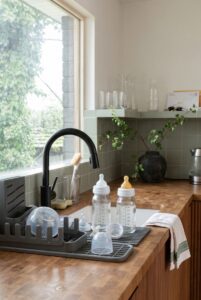
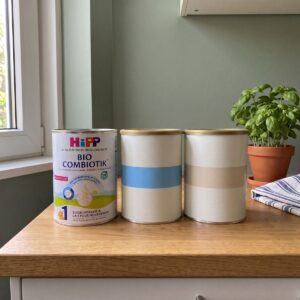
Here’s the one that quietly drained us: formula. Once my supply gave out and we moved fully to formula, the monthly cost became a genuine line item — and it got so much worse during the stretch where we were burning through expensive “sensitive” cans every few days, hunting for one that agreed with Theo. The thing that actually fixed the spending wasn’t a coupon. It was finally understanding what was in the can and landing on the one formula that worked, so we stopped buying a brand-new experiment every week. I wrote about how we got there separately, but the budgeting lesson was real: the cheapest formula is the one your baby actually tolerates, because that’s the day you stop pouring money down the drain on the ones they don’t.
The stuff I genuinely wasted money on
A wipe warmer. A second “travel” bouncer. Newborn shoes, which I still don’t understand the purpose of. A subscription box I forgot to cancel for three months. Three different swaddles before we found the one. Some of that waste is just tuition for first-time parenting, and that’s okay. But if I did it again, I’d buy almost nothing before the baby arrived, and then buy specifically for the baby I actually got.
The honest bottom line
You can raise a baby in this city without a trust fund. It takes leaning hard on the secondhand economy, resisting the bigger-apartment pressure, and spending real money only on the few things you touch every day. The city makes it expensive, sure. But the same density that drives the rent up also means a buy-nothing group three blocks away and a stoop full of free baby gear every Saturday. Use it.